
Understanding Logistics Intelligence Platforms
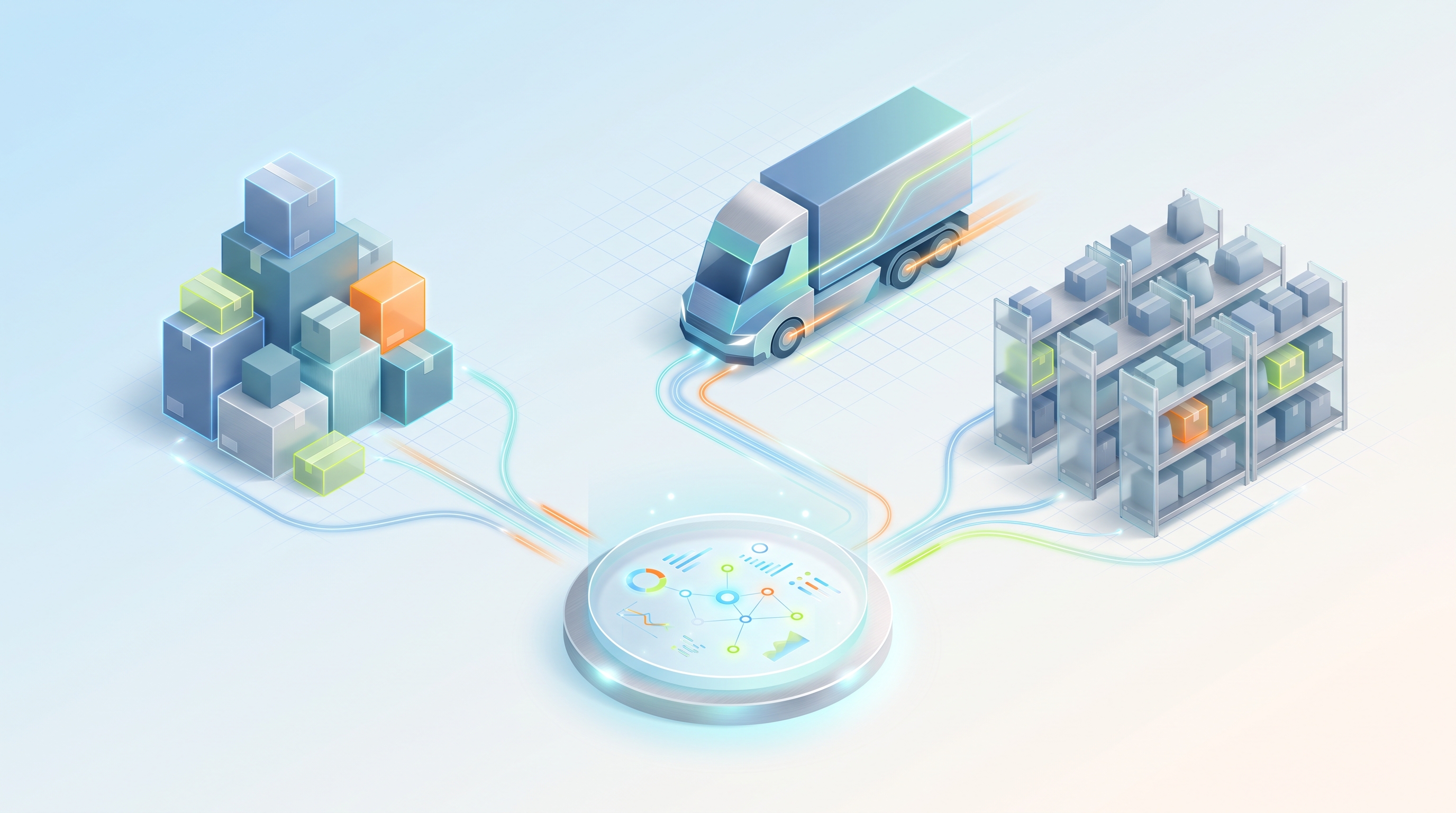
A logistics intelligence platform brings orders, fleets, warehouses, and tracking data into one system so a team can see and act on its supply chain in real time. Instead of jumping between separate booking, dispatch, and inventory tools, everyone works from the same live record.
What Is a Logistics Intelligence Platform?
A logistics intelligence platform is software that connects the different pieces of a supply chain — orders, transportation, warehousing, and fleet — and layers analytics and automation on top of that connected data.
The word "intelligence" points at two things. First, the platform gives you visibility: you can see what's happening across your operation without calling five different people. Second, it applies data-driven logic — dashboards, alerts, and (increasingly) AI — to help you act on what it shows you.
This is different from a single-purpose tool. A standalone route planner only knows about routes. A standalone warehouse system only knows about inventory. A logistics intelligence platform is built so those pieces share one underlying record, which is what makes the "intelligence" part possible in the first place.
Core Features to Expect
Most logistics intelligence platforms are judged on a similar set of core capabilities:
| Feature | What it does |
|---|---|
| Shipment management | Books orders, tracks cargo details, and moves a load through its lifecycle from booking to delivery |
| Fleet management | Registers drivers and vehicles, assigns loads, and tracks vehicle and driver status |
| Warehouse integration | Manages warehouses, storage locations, inventory items, and stock transactions |
| Real-time visibility | Shows shipment and delivery status as it changes, not after a phone call |
| Route optimization | Sequences multi-stop routes to reduce distance and time |
| Control tower analytics | Surfaces dashboards and exception alerts computed from live operational data |
The platforms that do this well share one architectural choice: they keep orders, shipments, routes, warehouses, and fleet on one connected data model. That single choice is what lets a dashboard reflect reality instead of a nightly batch export from three different systems.
Enterprise foundations matter just as much as the visible features, even though they rarely make it into a demo. Role-based permissions on every action, audit trails, multi-tenant isolation, and the ability to export your own data on demand are what let a logistics intelligence platform hold up under real operational and compliance pressure — not just look good in a sales call.
How AI Fits Into Logistics Intelligence
AI shows up in logistics intelligence platforms in a few concrete ways: forecasting demand, scoring which shipments are at risk of running late, and recommending route sequences.
The industry data backs up where this is heading. McKinsey's most recent global AI survey found that 88% of organizations now report regular AI use in at least one business function, yet only about a third have moved past pilots to scale it across the enterprise (McKinsey). That gap between "using AI somewhere" and "AI running at scale" is exactly where logistics intelligence platforms sit today — AI features are real, but most of the category is still an active build-out, not a finished checklist item.
It's worth asking any vendor exactly which AI capabilities are live today versus still in development. A platform that is upfront about that distinction is usually more trustworthy than one that markets every feature as already shipped.
The Benefits of Bringing It All Together
Unifying orders, fleet, and warehouse data on one platform solves a specific, common problem: teams working from disconnected spreadsheets and point tools, each with its own version of the truth.
When that data lives in one place, a few benefits follow naturally:
- Faster decisions. A dispatcher does not need to cross-reference three systems to know which driver is free and which warehouse has stock.
- Fewer integration headaches. There's no "integration tax" — the cost of keeping five best-of-breed tools in sync — because the data was never split apart to begin with.
- More transparent operations. Everyone from finance to the warehouse floor sees numbers computed from the same live records, not reconciled reports that disagree with each other.
- Room to scale. Adding a new warehouse or a new lane doesn't mean adding another disconnected tool to the stack.
What This Looks Like in Practice
It helps to see this as a concrete scenario rather than an abstract feature list. Picture a logistics coordinator who needs to keep every order and its paperwork — bookings, bills of lading, customs documents — searchable in one place instead of scattered across email threads and shared drives. On a unified platform, that coordinator opens one record and sees the order, its shipment, and its documents together.
Or picture an operations manager overseeing a growing shipment volume. Instead of manually checking status on every load, a control tower view surfaces only the exceptions that need attention — a delay, unusual dwell time, or an SLA at risk — and lets the rest of the network keep moving quietly in the background.
We describe scenarios like these in detail, honestly labeled as illustrative rather than customer case studies, on our own use cases page. Two examples worth reading if you want to see the pattern in more depth: keeping every order and document in one place and running a control tower with exception alerts.
How to Choose the Right Logistics Intelligence Platform
A few questions help separate a platform that will actually fit your operation from one that will just add another login to your team's day:
- Does it unify data, or just display it? Ask whether shipment, fleet, and warehouse data live on one model or get pulled together through a patchwork of integrations.
- Can it grow with you? Look for role-based permissions, multi-tenant support, and clear scalability — not just a demo built for a small dataset.
- How well does it integrate with what you already run? Few companies replace their entire TMS, WMS, and ERP stack overnight. The platform should be able to connect to what's already in place.
- Is the vendor honest about what's live versus planned? This matters more than it sounds. A vendor that clearly separates shipped features from its roadmap is easier to plan a rollout around than one whose marketing blurs the line.
- What does support look like after the sale? Implementation and training quality often matters as much as the feature list.
- Is pricing transparent? Published pricing tiers are easier to plan around than a sales-driven quote that changes based on how the conversation goes. If a vendor won't show you pricing without a call, treat that as a signal worth asking about directly.
None of these questions require a technical background to ask. They just require holding the vendor to specifics instead of accepting a general pitch about "AI-powered" or "real-time" without a definition attached.
Where the Category Is Headed
A few forces are pushing logistics intelligence platforms to get more capable, not just more crowded:
- Bigger, cheaper sensor networks. Gartner's 2025 supply chain technology trends point to "ambient invisible intelligence" — ultra-low-cost tags and sensors — making item-level, real-time visibility affordable at a scale that used to require expensive hardware (Gartner).
- More emphasis on scenario planning. Gartner has also urged supply chain leaders to prioritize advanced data visibility and scenario planning as global uncertainty makes single-forecast planning less reliable (Gartner).
- Consolidation of point tools. As unified platforms mature, the argument for stitching together five separate best-of-breed products gets weaker, especially for mid-market companies that don't have a large integration team.
Frequently Asked Questions
What does a logistics intelligence platform do?
It connects orders, shipments, fleet, and warehouse operations on one system, and layers dashboards, alerts, and analytics on top so teams can see and respond to what's happening in real time.
How is this different from a regular TMS or WMS?
A traditional TMS or WMS usually manages one slice of the operation — transport or warehouse — on its own. A logistics intelligence platform is built to unify several of those functions on one data model, so information doesn't need to be reconciled between separate tools.
What are the key features to look for?
Shipment management, fleet management, warehouse and inventory integration, real-time visibility, route optimization, and control tower analytics are the core features most buyers evaluate.
Why does real-time visibility matter so much?
Without it, teams find out about problems from a customer complaint instead of a dashboard alert. Real-time visibility lets operations teams respond to delays and disruptions before they escalate.
How do I choose the right platform for my company?
Prioritize genuine data unification over surface-level dashboards, confirm the platform can integrate with your existing systems, and pick a vendor that is transparent about what is shipped today versus what's still being built.
See It for Yourself
MoveTheWheels is building a logistics intelligence platform around one core idea: orders, shipments, fleet, and warehouse data belong on the same record, not five disconnected tools. Explore our features or join the waitlist to be notified when we launch in 2026.