
This is an illustrative scenario for a planned workflow, not a claim that the illustrated capability is shipped.
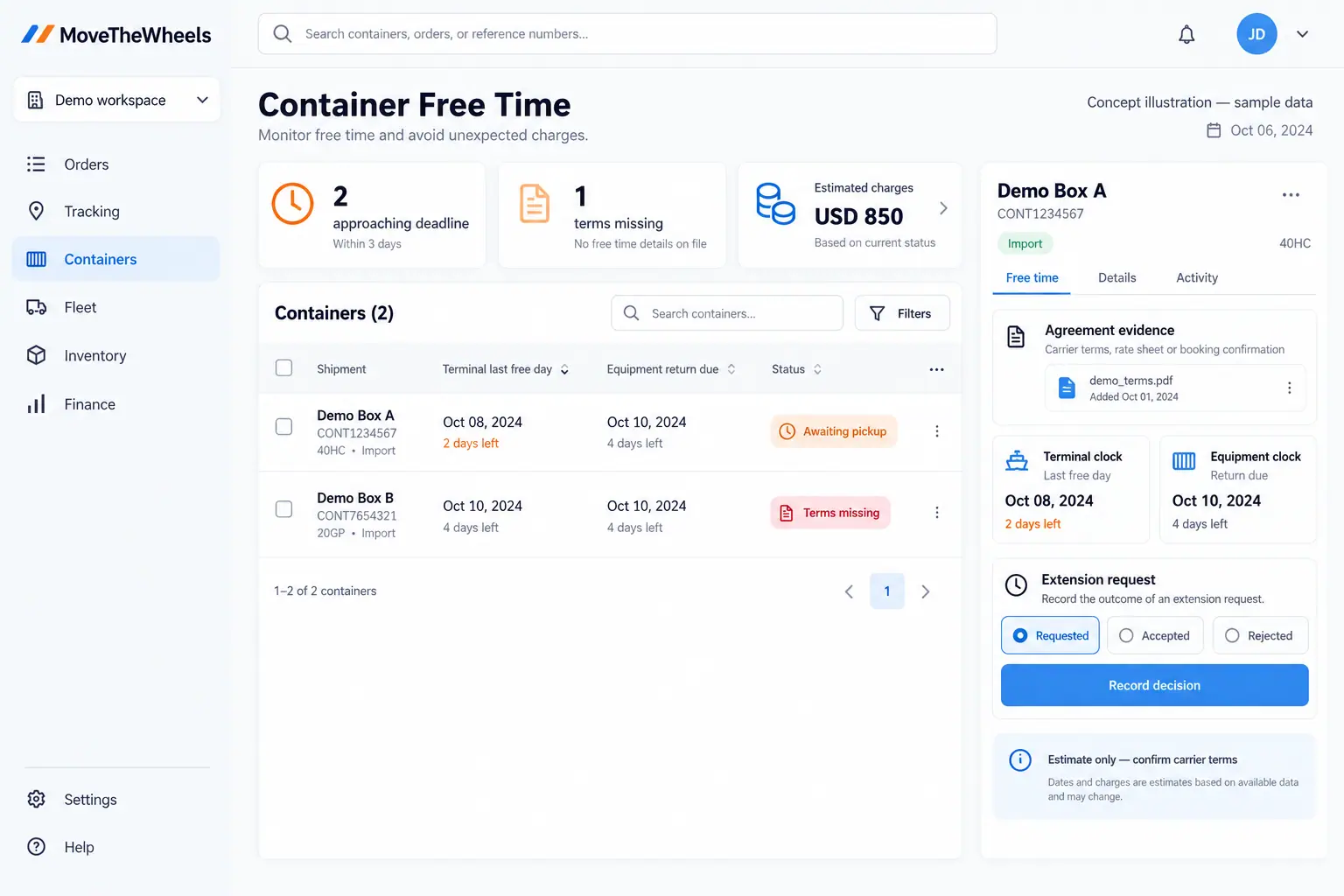
Imagine a forwarder reviewing a logistics decision with incomplete information. The Container Free-Time Workbench concept brings the deadline for collecting cargo and the obligation to return equipment into the same operational view without treating them as the same clock. A forwarder can see which sample containers need attention, which have missing terms and where a recorded agreement supports the displayed dates. The illustration explores a clear starting point for planning a pickup or requesting more time.
The central table separates terminal last-free-day from equipment return due, with container identifiers and status badges beside each row. Above it, summary cards call attention to approaching deadlines, missing agreements and estimated charges. Selecting a sample container opens a detail panel containing agreement evidence, independent terminal and equipment clock cards, and an extension decision area. Requested, accepted and rejected are distinct choices; the visible estimate notice reminds the reader that source terms must be confirmed rather than inferred from a status badge.
The planned workflow keeps external permission, physical evidence and qualified review separate from a planning suggestion. The illustration contains invented sample data and does not establish savings, compliance or a live partner integration.
Ready to make this your story?