Physical Container Lifecycle
Keep actual movements, estimated returns and operator cycle closure distinct.
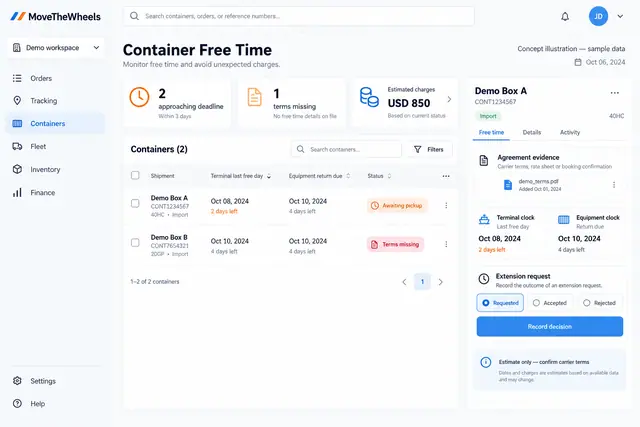
These images are illustrations of the concept, not screenshots of the actual product.
Overview
The Physical Container Lifecycle concept follows reusable equipment beyond the point at which its cargo has been delivered. A shipment can be complete while the container still needs unpacking, return acceptance or an approved next use. This illustration gives one physical box a distinct usage cycle and combines its event history, expected return, depot instruction and closure boundary in a single operational view.
The sample container summary names its cycle and shows an awaiting-return state. A horizontal timeline runs from empty release through inspection, stuffing, gate-in, discharge and unpacking to a pending return. Completed movements have actual badges, while the final return remains estimated. An event table repeats the date, location, source and kind of each sample record. The right panel states that accepted return is not recorded and shows source freshness. Below, a manual event form sits beside a disabled cycle-closure action and an explanation that an operator must record actual return and acceptance first.
Within MoveTheWheels, this design would complement shipment tracking with the equipment obligations that continue after delivery. An estimated date cannot establish custody or accepted depot return, and an old source update is a reason to investigate rather than infer a completed movement. The illustration contains invented identifiers, times and locations; it does not show a live terminal or carrier connection. It also does not imply that software can close a cycle automatically after its planned return date. The proposed experience keeps operational facts and outstanding obligations visible until an authorized person has the evidence needed to make a closure decision.
What this concept shows
- Asset and cycle identity
- Actual and estimated event badges
- Source freshness panel
- Explicit operator closure boundary
How it works
- Review the actual movement history.
- Record sourced return and acceptance evidence.
- Close the cycle only after its obligations are resolved.
Who it's for
- Container Operations Coordinator
- Logistics Operations Lead
Illustrations
1 illustration of this concept. Select one to view it full size.
Physical Container Lifecycle
This illustration shows Container Lifecycle for a sample box and usage cycle awaiting return. The timeline and event table distinguish actual movements from an estimated pending-return entry. A return-depot panel states that accepted return has not been recorded and lists source freshness for terminal, carrier and depot events. A manual Record event form captures type, date, location and notes. The Close cycle action is disabled, with text requiring actual return and recorded acceptance before an operator may close it. The sample history demonstrates that delivered cargo does not automatically close equipment obligations or turn an estimate into a custody event.
Topics
- physical container lifecycle
- logistics planning
- container operations
- operational evidence
- freight workflow
- concept illustration