
Essential Guide to Real-Time Transport Visibility
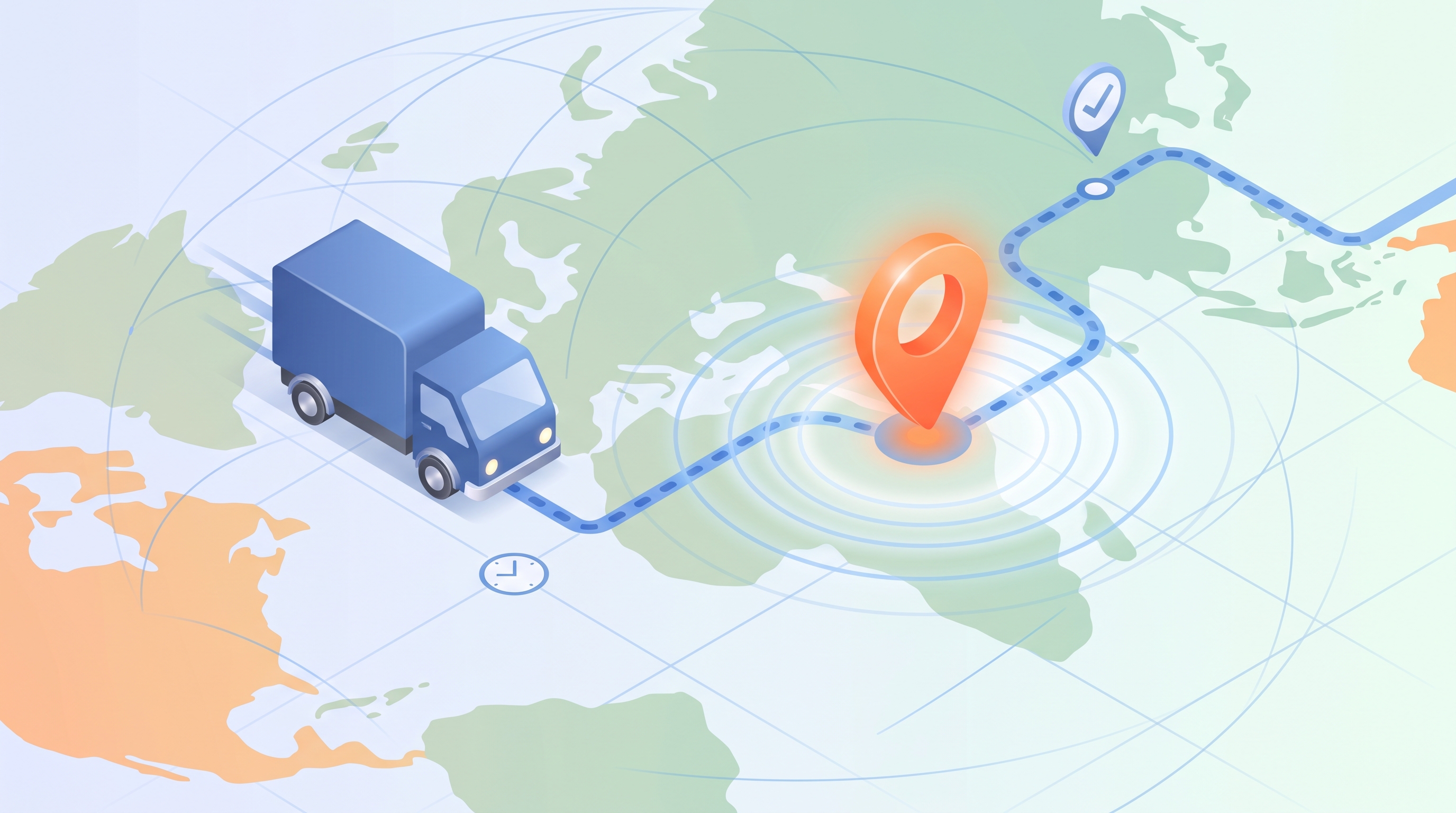
Real-time transport visibility means knowing exactly where a shipment is right now, not after a phone call to dispatch. This guide covers how the technology works, what it looks like in practice, and what to check for before choosing a tracking solution.
What Real-Time Transport Visibility Means
Gartner defines this category — often called a real-time transportation visibility platform, or RTTVP — as software that provides real-time location and status insight into shipments once they've left a warehouse or other origin point (Gartner). The data comes from integrations with carrier systems, direct telematics feeds, or tracking apps.
In plain terms: instead of a shipment status that only updates when someone manually checks in, a real-time system pushes status changes to you automatically, as they happen.
That distinction matters more than it sounds. A "tracking number" that updates once a day is not the same thing as real-time visibility. The difference is whether the data reaches you continuously or only when you go looking for it.
Why It Matters for Modern Supply Chains
Real-time tracking has moved from a nice-to-have to a baseline expectation, and the market reflects that shift. Market research firm Polaris estimates the global shipment tracking platform market at roughly $3.6 billion in 2025, projected to grow at a double-digit annual rate to nearly $9.8 billion by 2034 (Polaris Market Research).
That growth is driven by a simple change in customer expectations. People who can watch a food delivery move across a map now expect the same thing from a freight shipment or a B2B order. Companies that can't offer that visibility are increasingly at a disadvantage, regardless of how good their actual delivery performance is.
How Real-Time Tracking Works Under the Hood
Real-time transport visibility relies on a few layers working together:
- Location data. GPS on vehicles, RFID tags on pallets, or IoT sensors on individual items generate raw location signals.
- Status events. Beyond location, a shipment moves through defined states — booked, picked up, in-transit, out-for-delivery, delivered — and each transition gets recorded as an event.
- A connected record. Those events need to attach to the correct shipment or delivery, not float around as disconnected pings. This is what makes a tracking page trustworthy instead of a guess.
- Alerts and reporting. The system needs to turn raw events into something a human can act on — a live map, a dashboard, or an alert when something looks off track.
The technology sounds simple in isolation. The hard part is making sure every event lands on the right record, in the right order, without gaps — especially across a growing number of shipments and vehicles.
What a Status Timeline Looks Like in MoveTheWheels
MoveTheWheels tracks each shipment through a clear status timeline today: booked, picked up, in-transit, out-for-delivery, and delivered. Every transition is recorded against the shipment or delivery it belongs to, so the tracking view reflects what's actually happening rather than a stale export from another system.
We're building toward more than that. A predictive ETA — one that adjusts based on live conditions instead of a static estimate set at booking — and electronic proof of delivery with a signature, timestamp, and photo are both on our roadmap, not live yet. We'd rather tell you that directly than let "real-time tracking" imply more than the platform currently does. You can see this described end-to-end, roadmap items clearly labeled, on our tracking use case page.
Real-Time Visibility Across Transport Modes
Real-time tracking looks a little different depending on the mode of transport:
- Road freight typically relies on GPS from the vehicle itself, giving frequent, granular location updates.
- Ocean freight usually updates less often — sometimes only at port calls — because vessels don't have the same continuous connectivity as trucks.
- Air freight tracking tends to center on milestone events (departed, arrived, customs cleared) more than continuous GPS pings.
- Multimodal shipments need all of the above stitched into one timeline as a shipment moves between a truck, a ship, and another truck.
MoveTheWheels' shipment and tracking features work today regardless of the freight involved, but an explicit freight-mode classification — distinguishing full-truckload, less-than-truckload, ocean, and air as formal categories — is still on our roadmap. Right now, our strongest fit is road fleet operations, with broader multi-modal classification planned as the platform matures.
From Tracking to Action: Control Towers and Exception Alerts
Visibility on its own only helps if someone acts on it. That's why real-time tracking is usually paired with a control tower: a view that doesn't just show every shipment, but actively flags the ones that need attention.
In MoveTheWheels, that means live dashboards and automatic alerts for things like delays, unusual dwell time, or an SLA at risk — computed from the same shipment and tracking data the rest of the platform runs on, not a separately reconciled report. The goal is to let a small operations team manage a large, healthy network by exception, instead of manually checking every shipment one at a time. You can read a fuller scenario of what that looks like on our control tower use case page.
Real-Time Tracking vs. Predictive ETAs
It's worth separating two things that often get bundled under the same marketing label. Real-time tracking tells you where a shipment is right now. A predictive ETA goes a step further, using location, traffic, and historical lane performance to forecast when it will arrive — and to flag early if that forecast is trending late.
Tracking is the foundation; prediction is built on top of it. A platform needs reliable, connected tracking data before a predictive model has anything useful to learn from. That's part of why we built MoveTheWheels' shipment timeline first, with predictive ETAs as the next layer on our roadmap — you can see how we frame that target experience on our predictive ETA use case page.
Choosing a Real-Time Tracking Solution
A few practical questions help narrow down a real-time tracking solution:
- Does it integrate with your existing systems? Integration is a real hurdle, not a footnote — a recent fleet management survey found 40% of fleet managers cite trouble integrating new tracking tools with their existing processes (Asset Finance Connect). Ask about integration paths before you sign anything.
- Is the data actually real-time, or just frequently refreshed? Ask how often location and status data updates, and where that data originates.
- Does tracking connect to fleet and warehouse data, or sit on its own? A tracking view that's isolated from the rest of your operational data is less useful than one wired into the same record as dispatch and inventory.
- What happens when something goes wrong? Look for exception alerts, not just a passive map — the value is in getting notified before a customer complains, not after.
- What's the total cost of implementation? The same survey found 47% of fleet managers cite implementation and maintenance costs as a top barrier, so get a clear answer on total cost, not just a licensing fee (Asset Finance Connect).
What's Next for Transport Visibility
A few developments are shaping where real-time tracking goes from here:
- Cheaper, smaller sensors. Gartner's 2025 supply chain technology trends highlight "ambient invisible intelligence" — ultra-low-cost tags — as a way to make item-level tracking affordable at a scale that used to require expensive hardware on every asset (Gartner).
- Deeper IoT integration. More sensors on trailers, containers, and pallets mean tracking data that covers temperature, humidity, and shock, not just location.
- AI-driven prediction layered on top of tracking. As more companies adopt predictive ETAs, raw location data becomes an input to a forecast instead of the end product itself.
- Sustainability tracking. Emissions and fuel-use data are increasingly captured alongside location and status, as companies face more pressure to report on the environmental footprint of their freight.
Frequently Asked Questions
Why is real-time tracking important in logistics?
It replaces guesswork with facts. Instead of finding out about a delay from a customer complaint, operations teams see it as it happens and can respond before it escalates.
What technologies enable real-time logistics tracking?
GPS on vehicles, RFID tags, IoT sensors, and cloud-based data pipelines work together to continuously capture and report shipment location and status.
Can real-time tracking work across every transport mode?
Yes, though the update frequency varies. Road freight typically has the most frequent GPS updates, while ocean and air freight often rely more on milestone events due to connectivity limits.
What are the biggest challenges in adopting real-time tracking?
Integration with existing systems and the cost of implementation are the two most commonly cited barriers, based on recent fleet management surveys.
Does MoveTheWheels offer real-time tracking today?
Yes — a shipment's status timeline (booked, picked up, in-transit, out-for-delivery, delivered) updates live today. Predictive ETAs and electronic proof of delivery are on our roadmap and not yet available.
Try It for Yourself
Real-time visibility works best when it's built into the same platform as your orders, fleet, and warehouse data — not bolted on as a separate tracking tool. See how MoveTheWheels approaches it on our features page, or join the waitlist to be notified when we launch in 2026.